Full hardware lifecycle visibility, from the production floor to flight.

When something goes wrong mid-flight, the investigation requires two things: what the machine was doing at the time, and how it was built. Those answers typically live in separate systems, forcing engineers to manually cross-reference telemetry against build records, serial numbers, and technician logs. Sift and Manufacturo connect those two data layers directly, giving engineering teams a unified view of build history and runtime behavior in one workflow.

What each platform does

The integration links these two systems directly. Sift annotations connect to Manufacturo build records, surfacing the exact component, operator, and process step involved in an anomaly. Nonconformance Reports in Manufacturo can be generated automatically from Sift annotations, removing the manual handoff between test and quality workflows.

Revel provides the Control Plane

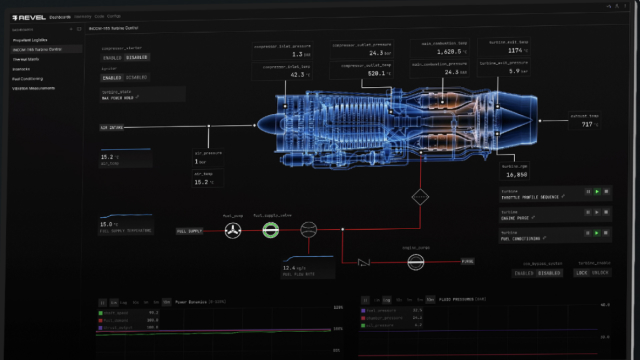
Revel is a full-stack hardware control platform that helps engineers command physical systems with real-time, deterministic control loops. With a SpaceX-inspired domain-specific language, intuitive interface, and high-performance runtime, teams can build control software up to 10× faster and eliminate entire classes of bugs.

Sift provides the Intelligence Plane

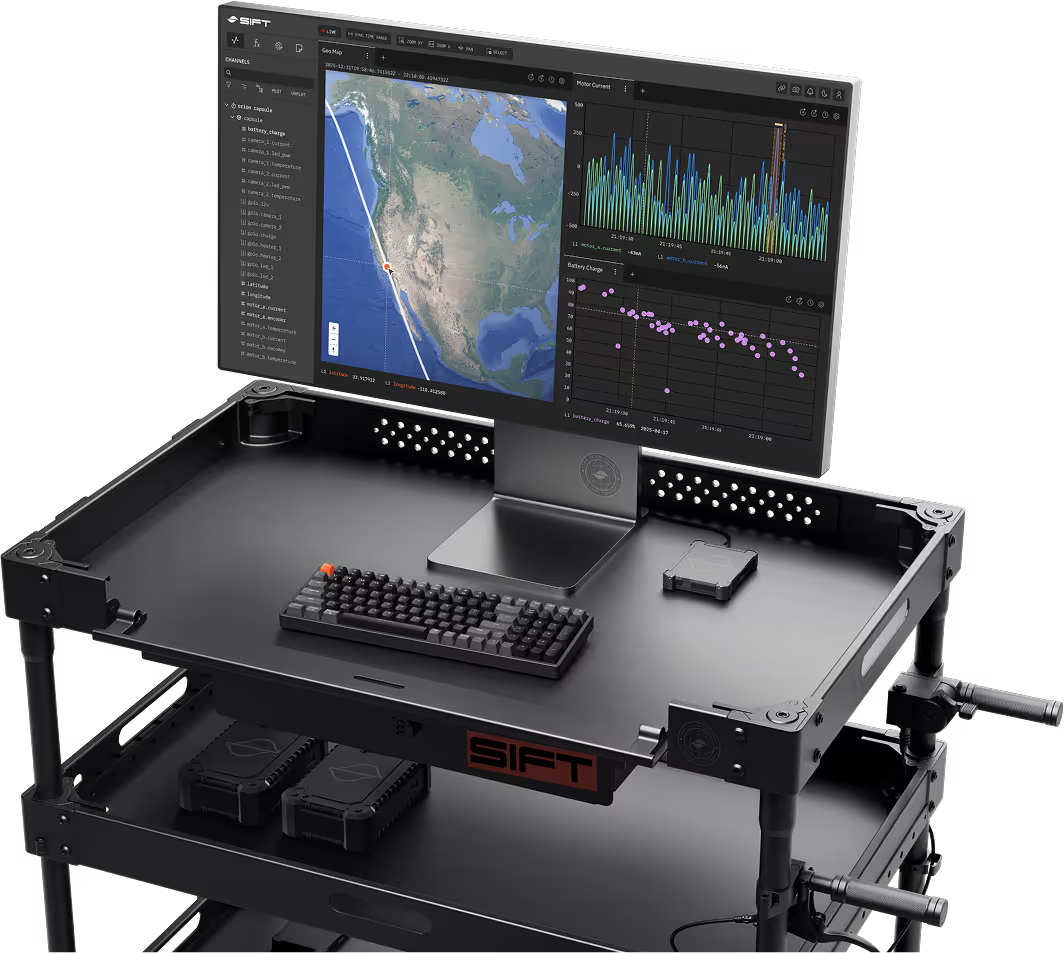
Sift is an observability platform for complex hardware telemetry–high-sampling rates, time alignment, and more. It enables engineers to ingest, analyze, and act on vast telemetry streams. All with no-code visualizations, anomaly detection, and streamlined workflows. Turn raw signals into actionable insights in minutes, not weeks.

What the integration enables

Post-anomaly investigation without the manual correlation

When Sift detects an off-nominal event, engineers can immediately access the full Manufacturo build record for the affected component. Torque settings, material lot, calibration history, and installation sequence are available in context, not buried in a separate system.

Automated nonconformance reporting

Sift annotations trigger Manufacturo Nonconformance Reports directly, so the documentation trail starts the moment an issue is detected rather than hours later when an engineer gets around to filing it.

As-built data synced to the asset model

Manufacturo's as-built records sync with Sift's asset model, so every component's manufacturing history travels with it through testing, integration, reconfiguration, and field maintenance. Engineers working in Sift always have access to what they are actually looking at, not just telemetry data stripped of context.

Test results embedded in manufacturing workflows

Sift test data flows directly into Manufacturo, linking behavioral performance to build records. When a component goes through multiple test cycles or gets reassigned to a new system, the history is continuous and searchable.

Certification evidence without the manual assembly

Compliance and certification reviews require connecting test data to build provenance. With Sift and Manufacturo integrated, that evidence trail is built automatically as engineering work happens, rather than assembled retroactively before an audit.

How hardware innovators use Manufacturo & Sift

Post-flight propulsion anomaly

After a test flight flags unusual vibration in a propulsion subsystem, engineers use Sift to isolate the telemetry signature and identify the affected component. They pull the Manufacturo build record for that subassembly and find a torque wrench recalibration mid-shift that falls outside spec for the installation step in question. The root cause is scoped precisely enough that fleet-wide reinspection is avoided. A targeted corrective action is deployed the same day.

In-flight thermal anomaly during test campaign

Sift flags an abnormal thermal signature on a structural component during a flight test. Cross-referencing the affected unit in Manufacturo shows it belongs to a batch where a new thermal interface material was introduced. Application thickness variance is identified as the cause. The team updates the SOP, notifies the supplier, and closes the issue without disrupting the ongoing test campaign.
Engineers are building 21st-century machines with 20th-century tools. This partnership eliminates the manual overhead, making machine genealogy and issue tracking fully traceable in real time.
Karthik Gollapudi
CEO and Co-founder, Sift
Regulatory audits demand a complete view of component history. Now, manufacturers can track every part's lifecycle without digging through disconnected systems.
James Montgomery
CEO and Co-founder, Sift

Where teams get stuck

Aerospace professionals cite traceability and telemetry management as top challenges, specifically because the relevant data lives in siloed tools with no shared workflow. The cost shows up as slower root cause analysis, longer certification timelines, and risk that compounds as systems scale.

Traceability without observability tells you how something was built but not how it behaved. Observability without traceability tells you something failed but not why. Most engineering teams have one or the other. This integration gives you both, in the same investigation workflow.
Photo courtesy of K2 Space

Ready to crush your next milestone?

Let’s talk about how Sift can streamline development, reduce risk, and accelerate certification.
Rather join a group demo? Register for our weekly demo here.