.svg)
Detection isn't the bottleneck. Triage is.
When something goes wrong during a test campaign, spotting the problem is rarely what slows you down. The slowdown is everything after: tracing the fault to a specific part, pulling the manufacturing history, identifying the build lot, and getting the fix to the right person.
That process routinely burns 4 to 8 hours of engineering time per incident.
Sift and Palantir came at this from opposite ends. Palantir built Foundry to model an entire operation: every component, every workflow, every manufacturing decision connected in a single place. Sift built a real-time engine that catches anomalies the moment a system drifts.
One maps the enterprise. The other watches the machine. Neither alone closes the loop.
Gui Cavalcanti, who spent years at Palantir before joining Sift, put it directly:
Palantir's Warp Speed goals and Sift's mission both tie back to rebuilding American manufacturing. Shared goals, complementary technology. Sift picks up where Foundry leaves off, and Foundry's AIP supercharges what Sift's rules engine can do.
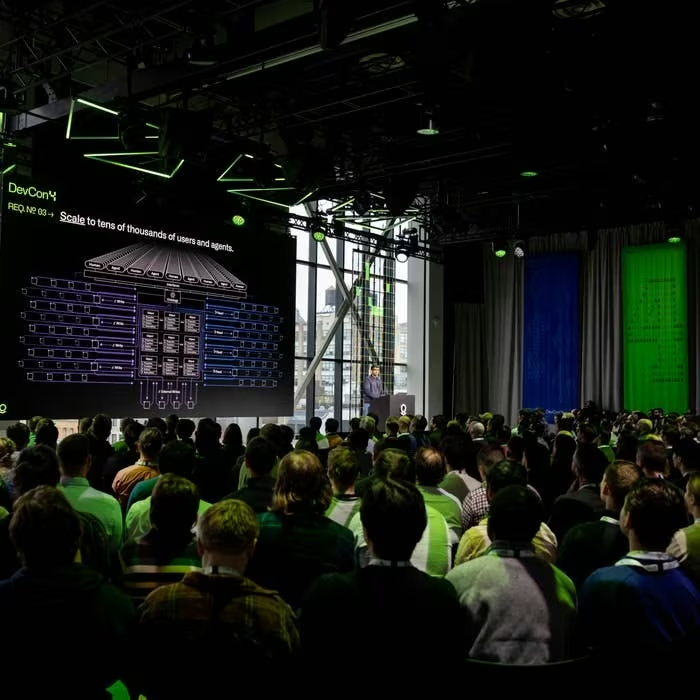
Through the Palantir Startup Fellowship, our engineering team set out to prove that. What we built at DevCon 4 turns two separate systems into one workflow, from the first signal to the fix.
From anomaly flag to traced part in 10x Faster.
A satellite reaction wheel runs hotter than expected during a test run. Sift catches it in real time. Without Foundry, you see the flag and start the familiar crawl: which subsystem, which part, which build lot, which supplier. That's 24-72 hours before you touch a fix.
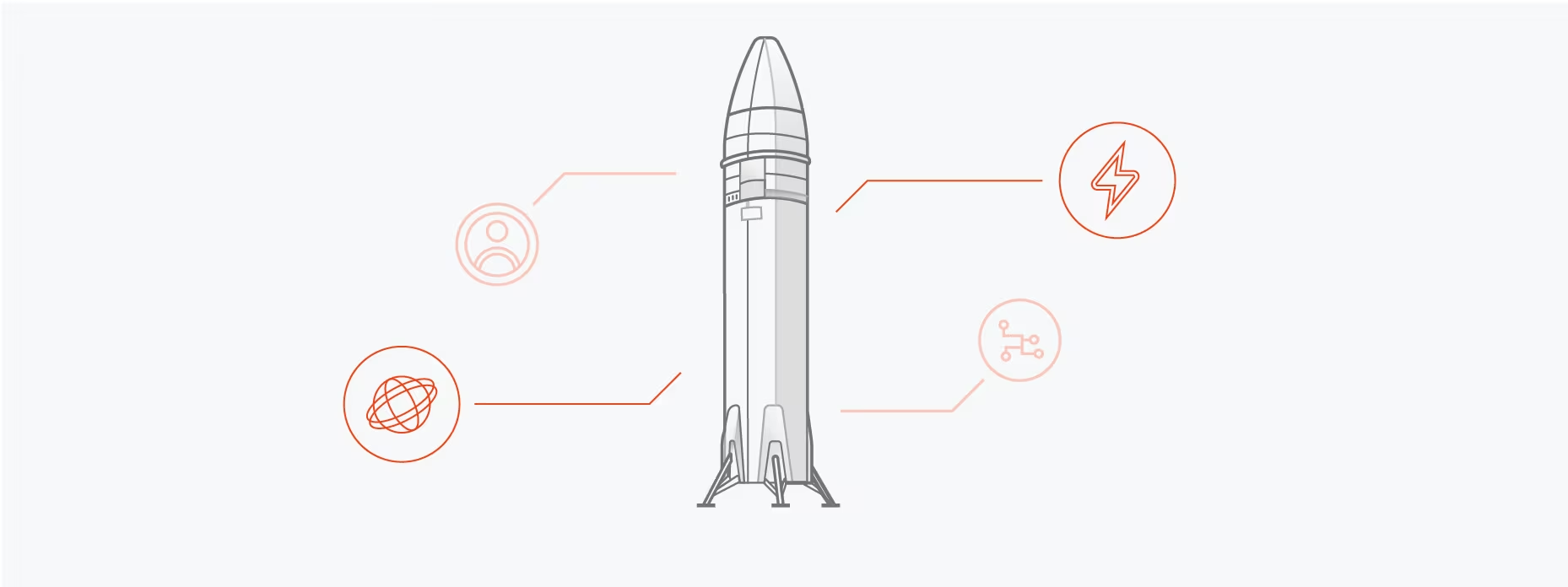
With the integration, the fault traces to a specific bearing assembly in under 4 hours. Three capabilities working together make that possible.
When Sift flags the issue, the annotation feeds back into Foundry through Ontology Sync. A workflow maps the fault to the specific part and manufacturing batch. You confirm the match. The data stays in Sift. The context stays in Foundry. To you, it works as one system.
At the same time, Foundry's AIP is analyzing patterns in your machine data and writing detection logic via AI Rule Creation. That logic feeds directly into Sift's rules engine, where you can review and deploy it. The rules become sharper over time as Foundry continues to learn from the full operational picture.
The entire workflow runs from a single place. Through Real-Time Evaluation, you trigger Sift directly from within Foundry, extending Warp Speed into hardware under active test.
No switching tools. No exporting data.
.avif)
Ship the fix before your next test run
Instead of finding a fault and then piecing together the context, you see the full picture the moment something goes wrong: what drifted, which part it traces to, what the history looks like, and who should act on it.
You don't just find problems faster. You understand why something failed and ship the fix before your next test run.
Rebuilding American hardware manufacturing from both sides
Palantir's Warp Speed initiative and Sift's platform serve the same goal: rebuilding American hardware manufacturing with software that matches the complexity of the machines being built.
This integration is the first proof point. Foundry models the enterprise. Sift watches the hardware. Together, they give engineering teams real-time detection connected to the full operational picture, with AI closing the gap between signal and action.
We're just getting started. If you want to follow what we're building and why, subscribe to the Sift blog for the engineering decisions behind what comes next.



.avif)