.svg)
Software engineers built their own observability stack decades ago. Datadog, Honeycomb, InfluxDB, others: billions of dollars of tooling exist because the people who needed monitoring tools were the same people who could build them.
Hardware engineers never got that luxury. And until recently, not many people noticed.
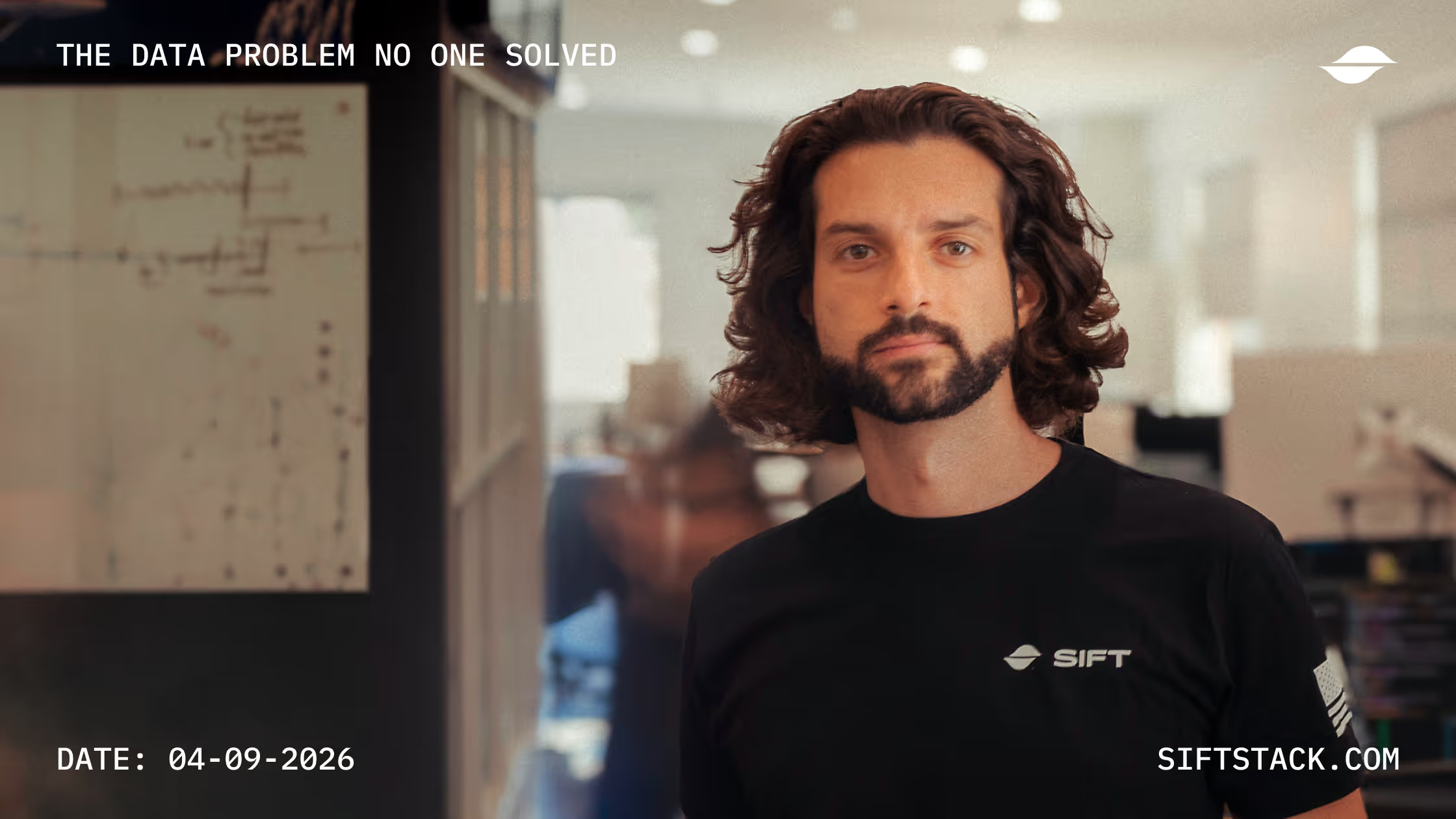
On the BUILT Leaders podcast, Sift co-founder and CTO Austin Spiegel broke down why hardware telemetry has lagged so far behind, and how the lessons he carried from SpaceX and Riot Games now shape how Sift builds its team, its product, and its culture.
Hardware telemetry has been underserved for decades
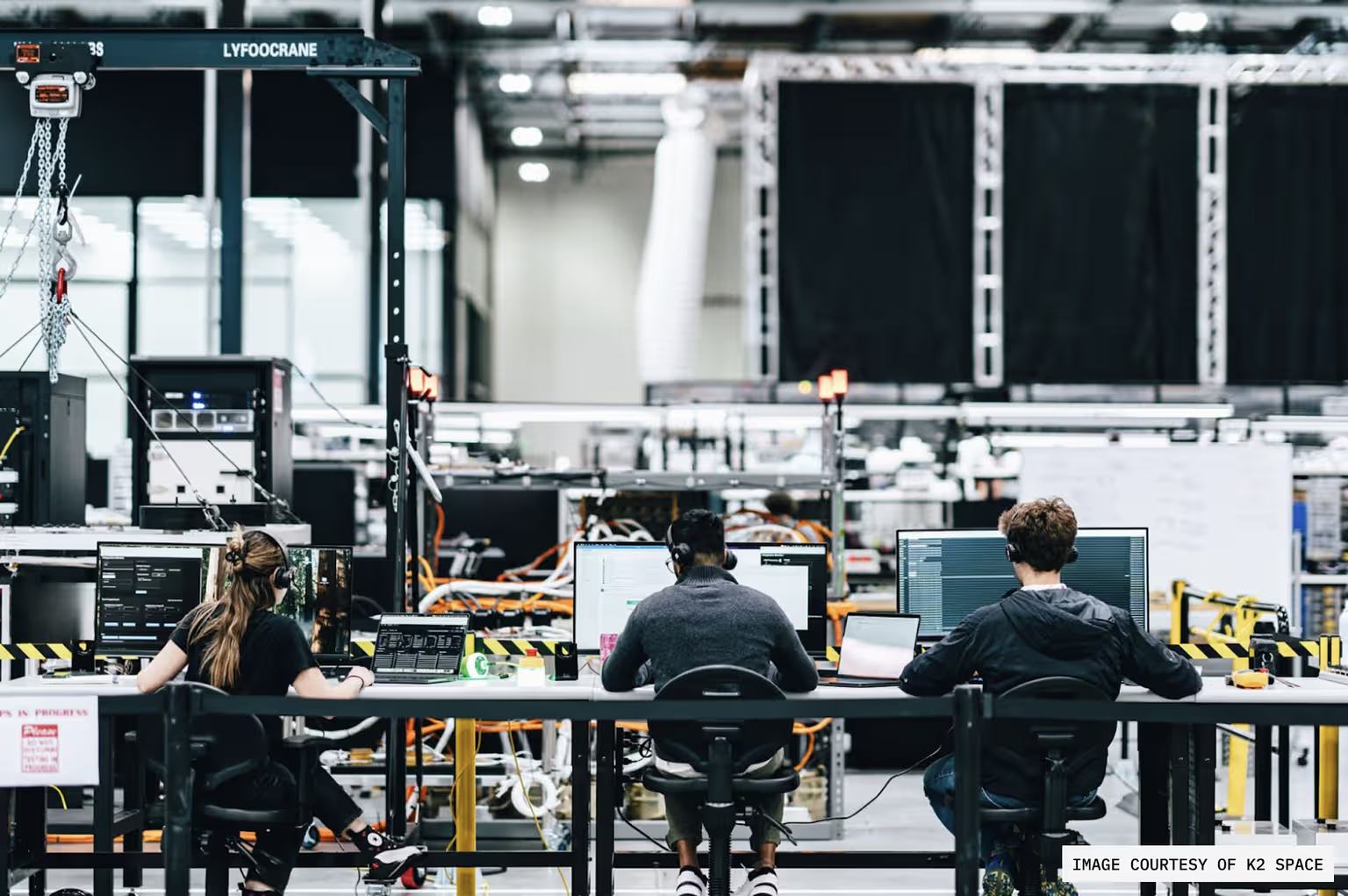
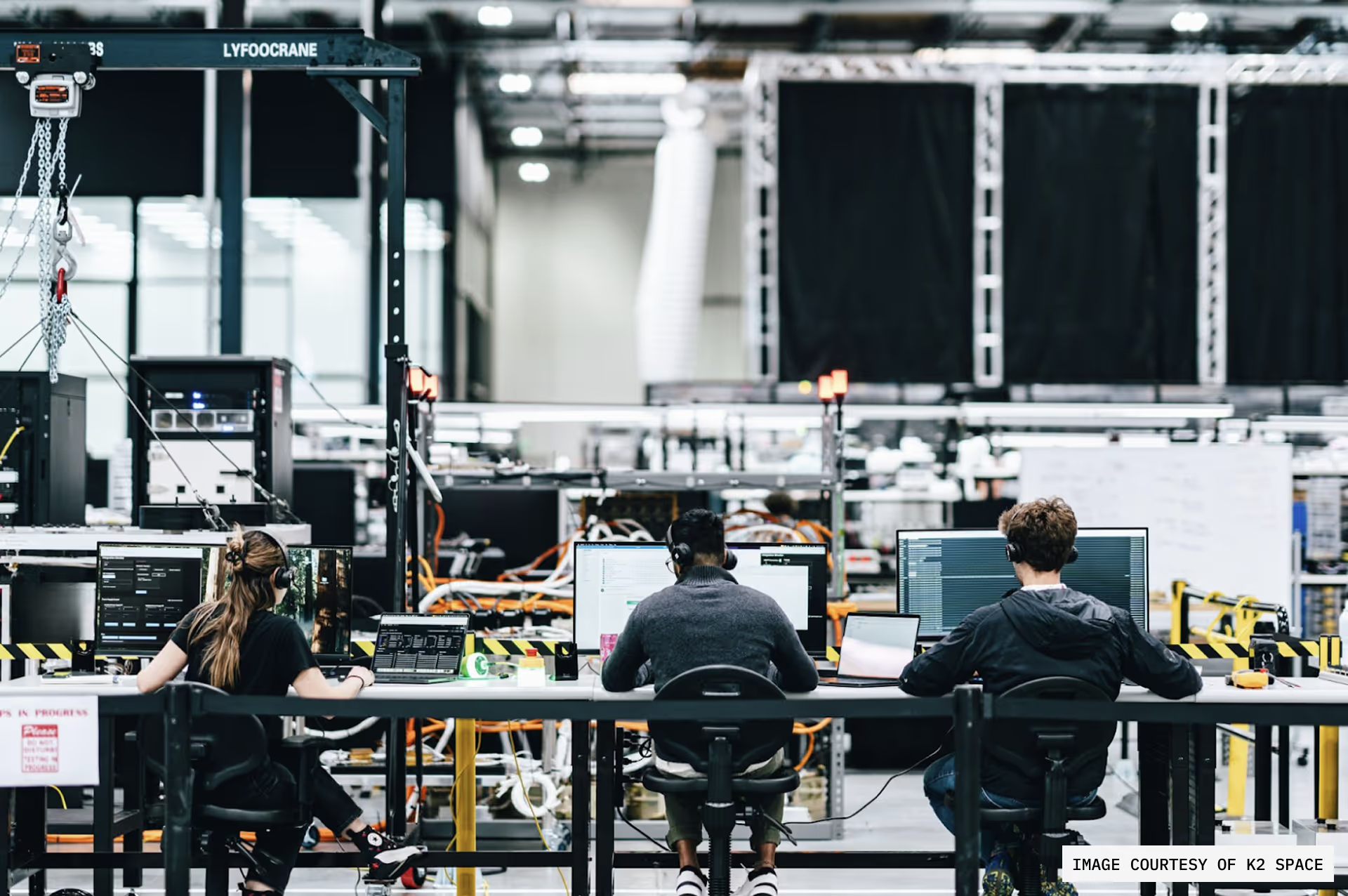
Telemetry, sensor data paired with timestamps from physical systems, is how engineers understand what their machines are doing. For decades, hardware teams managed this data with homegrown scripts, spreadsheets, and tribal knowledge. It worked well enough when the machines were simpler and the teams were small.
That's no longer the case. Machines have become dramatically more complex. A growing wave of startups and established companies are building increasingly sophisticated hardware: autonomous vehicles, reusable rockets, advanced defense systems. Data volumes have exploded, precision requirements have sharpened (a vehicle anomaly can unfold in milliseconds, demanding sub-nanosecond fidelity to analyze), and legacy workflows can't keep up.
The reason hardware fell so far behind software isn't a mystery. Software engineers solved observability for themselves. Hardware engineers, focused on the physical systems, didn't have the same opportunity. Until the recent boom in complex hardware development, not enough people recognized the gap.
Sift brings to market a platform to address the hardware telemetry gap
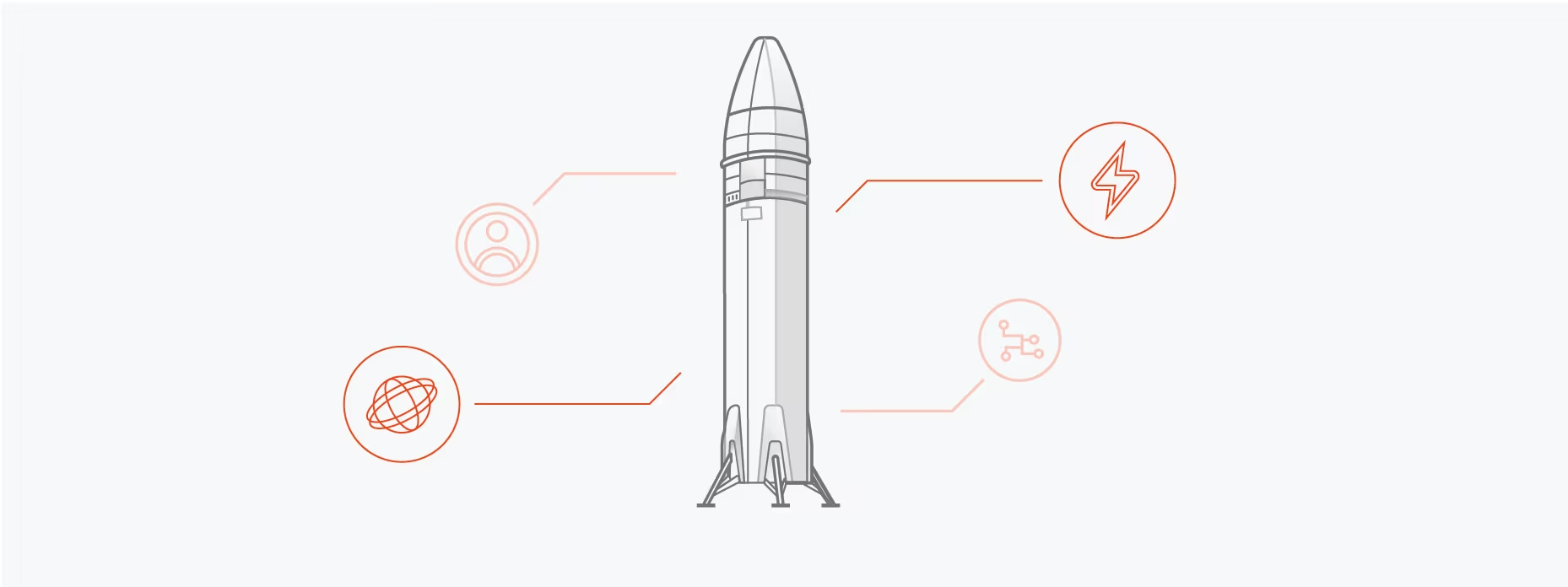
At SpaceX, this gap in hardware telemetry was solved early on. Not because it was building rockets, but because it had hundreds of software engineers building world-class internal data infrastructure to support those rockets. Most hardware companies don't have the same engineering headcount and therefore the same luxury of building proprietary tooling in-house. They need that same capability off the shelf. Sift was started to bring that solution to the rest of the market.
How SpaceX and Riot Games shaped Sift's leadership philosophy
Sift's approach to leadership and team-building draws directly from Austin’s experience across two very different organizations. At SpaceX, he moved into people management early, at a time when the organization was flat enough that decisions bottlenecked in too few people. Clear decision-making authority and the lack of defined leadership layers slowed things down. The lesson: structure isn't bureaucracy. Accountability and well-defined roles help teams move faster, not slower.
At Riot Games, the model looked nothing like SpaceX. A manager, a tech lead, and a delivery lead all supported a single 10-person engineering team. Less direct control, more structured support. Austin went from being an IC-manager hybrid to a role that was almost entirely people-focused, learning to add value through context-gathering and guidance rather than technical contribution. The transition also introduced him to the weight of being a hiring manager for the first time, where filling headcount became one of the highest-leverage decisions he could make.
Across both environments, the same principle held: leaders create the most impact when they make themselves useful to people, even in areas where they aren't the domain expert.
Speed as a core value
These threads converge in a single principle that runs through Sift's culture: pace of learning is the only durable advantage. Launch, fail, learn, and ship again. Connecting Sift’s engineers directly to customers, so they see the real-world impact of their work, is what shortens the feedback loop and accelerates that cycle.
Whether building rockets or building a data platform, the companies that learn fastest win.
Hear the full conversation wherever you get your podcasts or on the BUILT Leaders YouTube channel. See how Sift is closing the hardware telemetry gap for engineering teams building what comes next.




.avif)

.avif)