.svg)
Why a former NASA engineer is building infrastructure for the next generation of hard tech
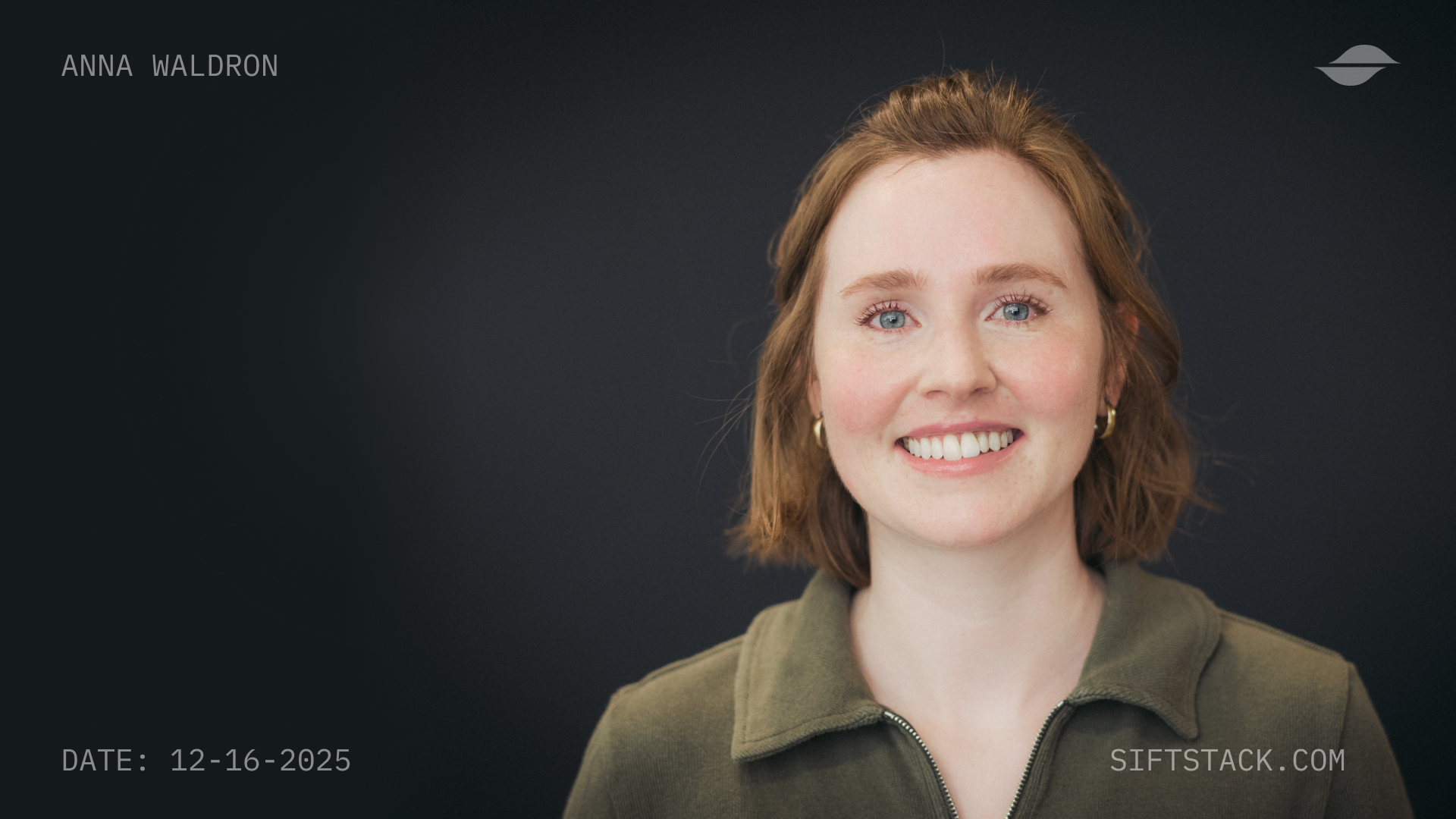
Anna Waldron is a Software Engineer at Sift, where she focuses on building resilient, high-performance data infrastructure to support test and launch operations for customers. Before joining Sift, she built AI-powered computer vision systems at Elementary and worked on science & ground data systems at NASA’s Jet Propulsion Laboratory. Anna has also held R&D roles across solar energy and climate tech. Her career has consistently focused on transforming hardware-generated data into actionable insights that drive engineering decisions.
Software for hardware
The real bottleneck in aerospace isn't running tests, it's understanding them. When something goes wrong, engineers waste hours (or days) hunting through telemetry trying to figure out what happened. Was it a code change? A sensor issue? Some interaction between systems that nobody predicted? The faster you can see what's going on in your data, the faster you can fix it and move on. That's the problem Sift's infrastructure solves: making massive streams of telemetry actually usable when you need it most, so engineers can spend their time fixing problems instead of finding them.
Our customers are shipping real machines: lunar rovers, autonomous vehicles, hypersonic testbeds. They’ve outgrown their internal tooling, but the commercial options aren’t built for the kind of data they’re dealing with: 10kHz sensor data, logs, video, simulations, all needing to be time-aligned and traceable. None of the standard IT observability tools were built for this world. And writing another in-house solution means spending more time maintaining your telemetry stack than improving the machine it’s meant to support. That’s where Sift comes in. We spend all day, every day focused on enabling the workflows that hardware engineers require.
Our customers are shipping real machines: lunar rovers, autonomous vehicles, hypersonic testbeds. They’ve outgrown their internal tooling, but the commercial options aren’t built for the kind of data they’re dealing with.
Data infrastructure that doesn’t flinch
At Sift, we’re building infrastructure that lets you get from a high-level test result to the exact moment things went wrong. You can go from logs to time-series to waveform views, all without context-switching or scraping through files. You can reliably monitor thousands of high frequency time series in real time. That kind of traceability is a game-changer for teams working on flight-critical systems, where clarity and speed both matter.
What draws me to this work is the sheer technical challenge of it. At the data rates and volumes that Sift handles, conventional approaches don’t work. You're forced to innovate at every layer of the stack, and need fundamentally different architectures for storage, processing, and querying. It has to be designed not just to scale, but to hold up under pressure. Everyone here is deeply committed to building infrastructure that other engineers can lean on when it matters most.
Owning the full problem
One thing that stands out at Sift is how much ownership engineers are trusted with. You’re not just here to implement specs. You’re expected to understand the problem space, make architectural calls, and take responsibility for how the product and platform evolve over time. The people writing the code are also shaping the roadmap. That proximity makes everything more coherent and more rewarding.
Case in point: we anticipated that our data layer was reaching its limits with continually increasing data rates and volumes, so we're rebuilding it from the ground up optimizing for performance, memory usage, and scale. That kind of architectural decision-making is what engineers here are trusted to do.
Why I joined
What drew me to Sift was the combination of difficult technical problems and a team that actually cares about solving them well. At our scale, handling high-frequency sensor data from dozens of subsystems simultaneously, you can't rely on standard approaches. We're constantly designing for optimal write throughput, query latency, and memory footprint. We're building systems that have to work in production, under pressure, for missions that matter. If you're the kind of person who sweats the details, thinks carefully about tradeoffs, and wants to build software that holds up, Sift is a good fit. At the end of the day, clear data means faster decisions. That's what I'm here to build.


.png)