Astro Mechanica is building a jet engine that adapts from subsonic to supersonic flight, and no service manual exists for it. See how their engineers wrote one instead, encoding the physics of multiple engine generations into a living record that nearly 250 billion samples later has never reset.
Astro Mechanica at a glance
FOUNDED
2021
HEADQUARTERS
San Francisco, California
MISSION
Transforming the world's relationship to time and space, flying faster, farther, and more efficiently.
BUILDING
A turboelectric adaptive jet engine that stays efficient from subsonic through supersonic flight and burns liquefied natural gas.
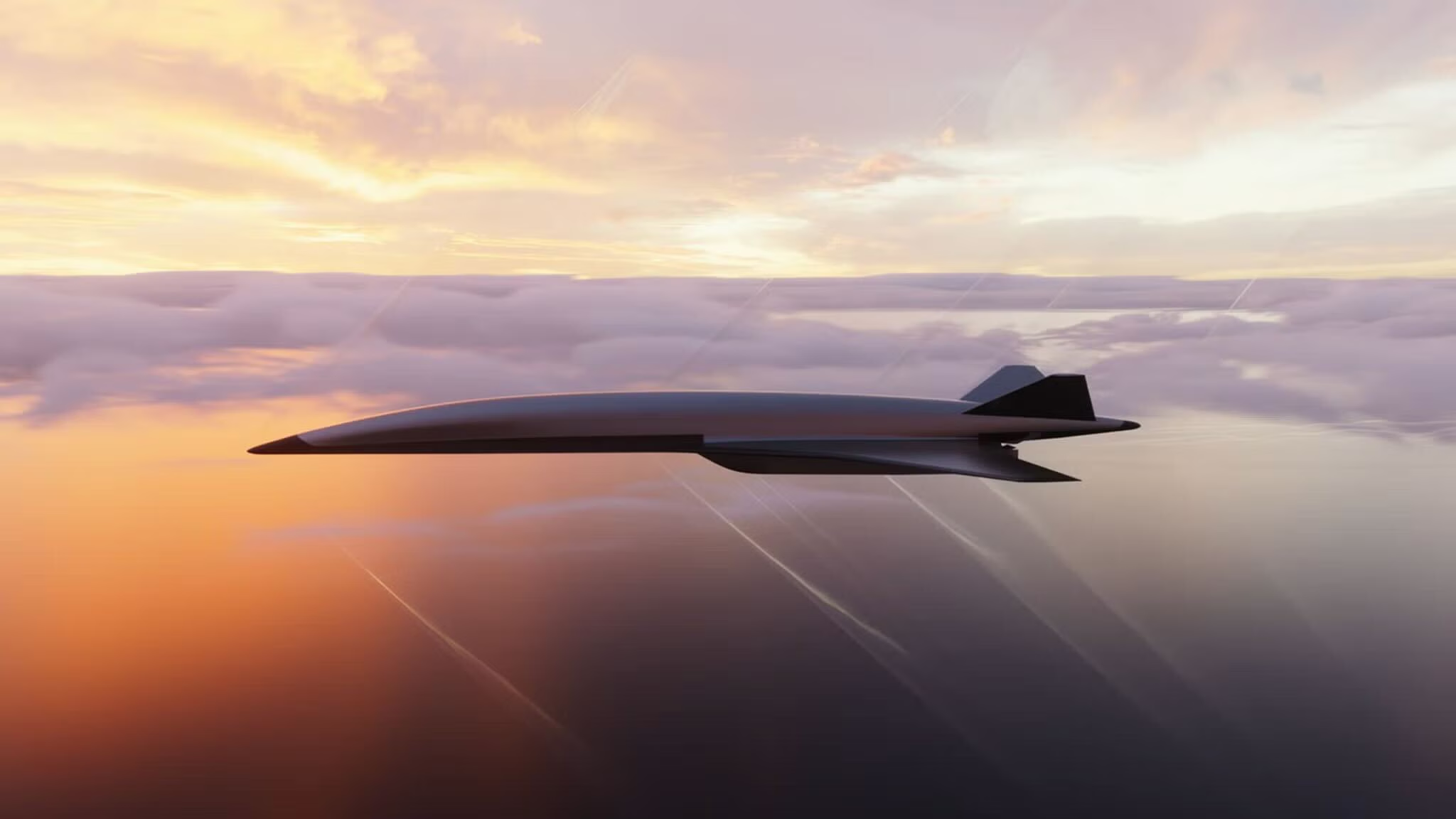
Supersonic passenger flight didn't disappear because it was impossible. It disappeared because it was expensive. Astro Mechanica is rebuilding the engine to fix that: electric motors drive the compressor independently, so one engine stays efficient from subsonic through supersonic while burning liquefied natural gas instead of jet fuel. The company has raised $27.1 million toward it.
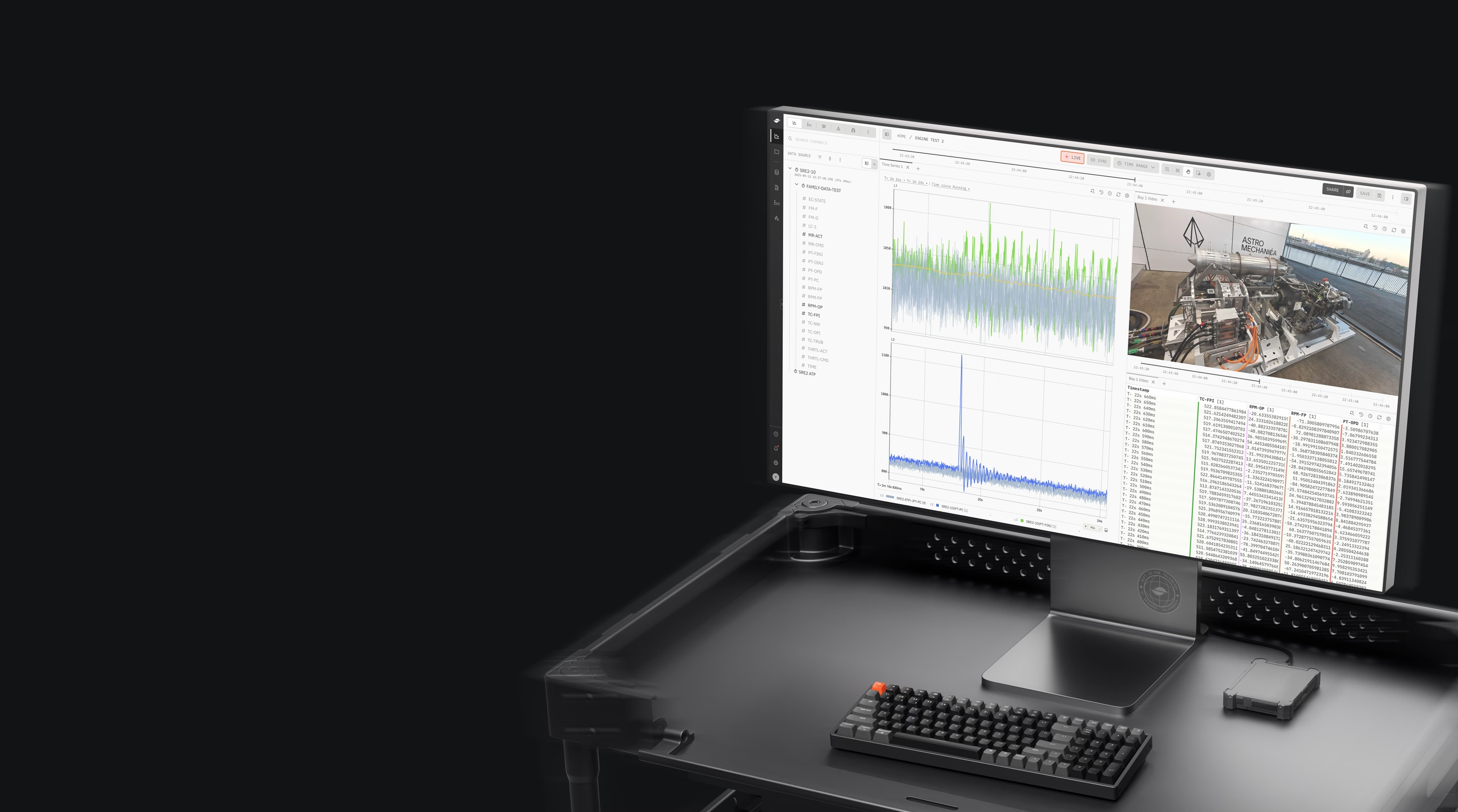
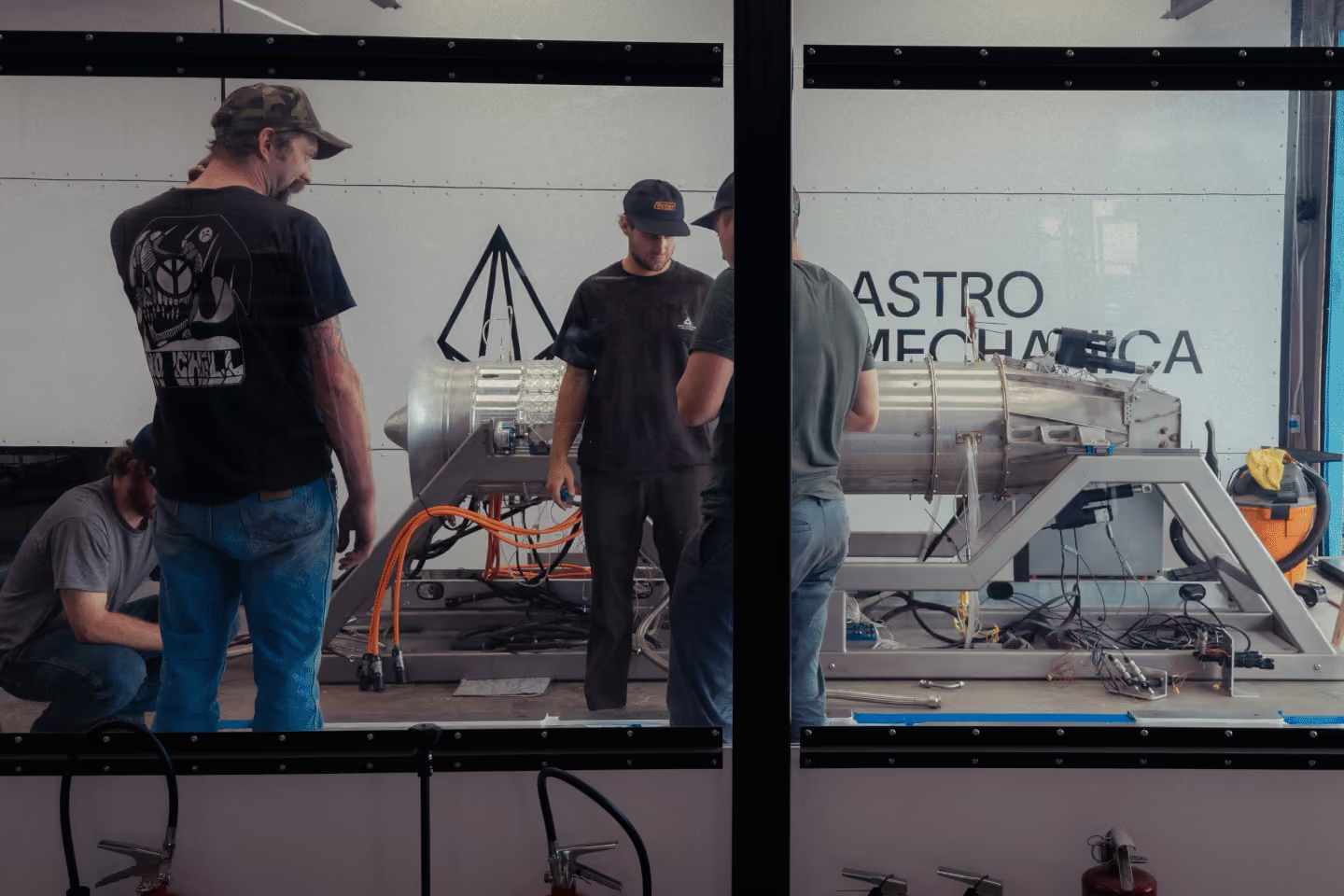
Inventing an engine means nobody can tell you what normal looks like. There is no service manual, no industry baseline, no decades of fleet data. Every answer gets earned on a stand: nearly 2,000 tests since October 2024, a median run of 40+ seconds, nearly 4000 channels recording simultaneously, no second takes.
The trap for a program moving this fast is that the knowledge ends up in scripts. Hardware iterates, channel names drift, and the analysis breaks on a rename, taking the last generation's lessons with it. Astro Mechanica put that math on Sift early, bound to the engine instead of the script.

Python scripts crashed when a channel name didn't match. Config files got rebuilt by hand for every stand configuration, and one investigation ran from a few minutes to a couple of hours. Worse, the knowledge of how the engine behaved lived in whoever wrote the scripts.
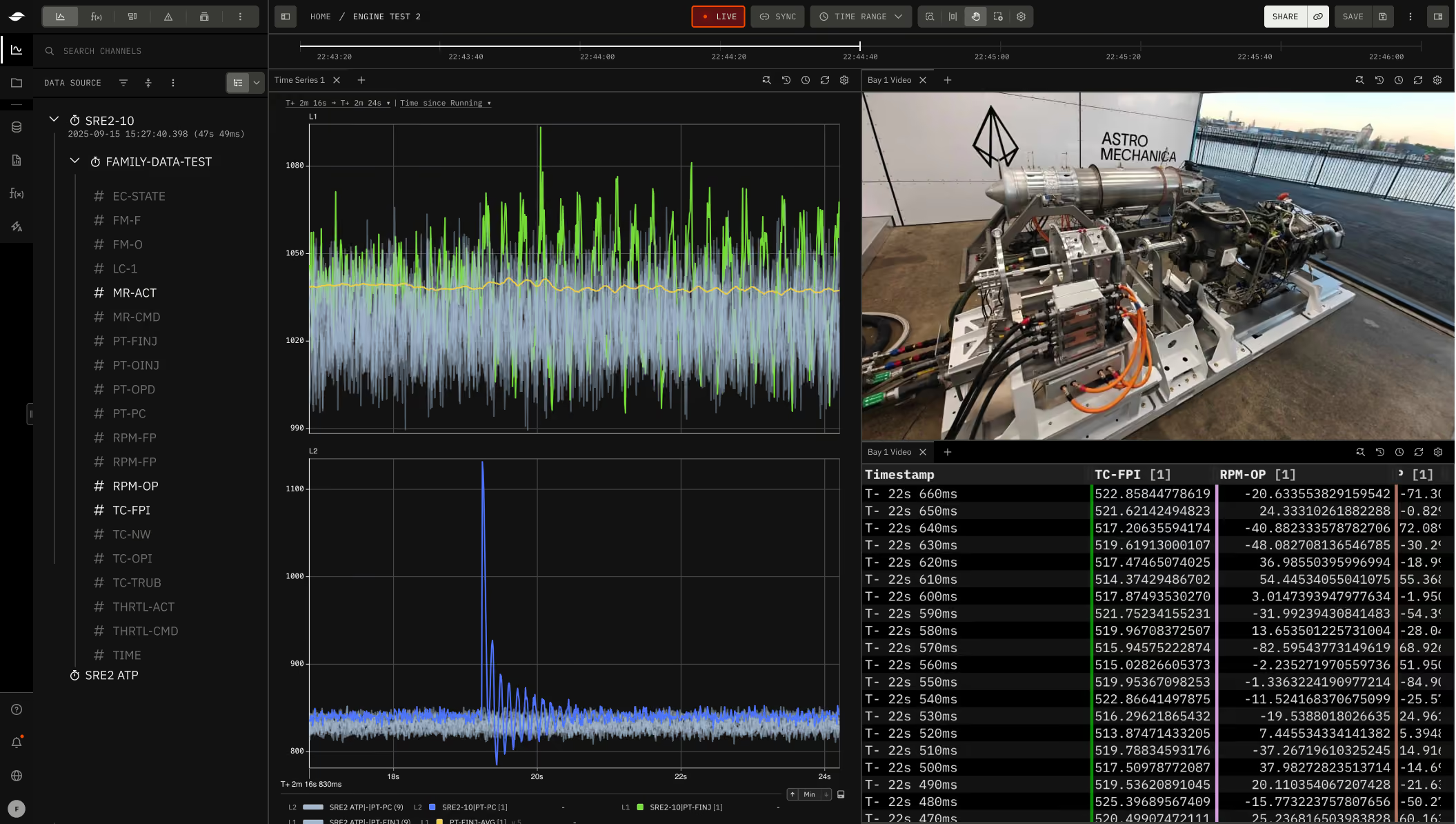
Compute engine performance on raw telemetry the moment a run ends. Push the hard aerothermodynamics into named, versioned expressions anyone on the team can call. Bind all of it to the engine rather than a single test, which is what Sift does with Calculated Channels.
Astro Mechanica stood up its new-generation engine in March 2026 and ran 400+ tests that month, 2.5 times its fastest pace ever, because the analysis was already waiting. Their newest engine came online in August 2026 and was fully instrumented in six days.

In their words
It's just no-headache problem solving. The pitch from Sift, and what we've experienced so far, is simple: the thing is going to work. Put your data in, and you can do what you need with it.
Matt Perkins VP of Engineering, Astro Mechanica
By the numbers
2,000
Engine tests since October 2024
Multiple tests every working day for nearly two years, across multiple engine generations. Every one of them still readable against the others on a single record.
250B
Samples recorded at 100 Hz
Nearly 4000 channels record simultaneously for a 40+ second run. The record holds every one at full rate, so no detail averages away later.
2.5x
Test cadence in the month a new engine arrived
400+ tests in March 2026, when the new generation engine came up. The analysis was already waiting for it, so nothing slowed to rebuild scripts.
6 days
To fully instrument a brand new engine
August 2026: 50+ runs and 50 new calculated channels in the first week, 22 of them reading the new hardware against the old immediately.
Sift for Aerospace
Write a performance calculation once and have it apply to every run that follows, across generations, without touching it again.
Express the aerothermodynamics your team relies on, the isentropic relations that turn pressure ratios into Mach number, as named User-Defined Functions anyone can call.
Give subsystem partners the exact channels they need and nothing beyond them, so data moves through the supply chain without exposing the design.
Sift features
Compute engine performance the moment a run ends
→
Every station from compressor to nozzle evaluates on raw telemetry as the sequence closes, using Calculated Channels, so results are ready before anyone opens a plot.
Write the hard math once and call it by name
→
The isentropic flow relations live as reusable, versioned expressions in User-Defined Functions, including range-gated medians that vote a failed sensor out of the answer automatically.
Overlay two runs at full fidelity
→
Two 40+ second tests sit on one timeline that holds at every zoom level when aligned to a shared T-0, so hardware differences show up instead of averaging away.
Put the record in every engineer's hands, no code required
→
A shared no-code workspace in Explore took Astro Mechanica from a standing start to 1,786 plotting events in April, and from four monthly users to 17.
Scope partner access down to the channel
→
Vendors get exactly the subsystem data they need through attribute-based access control, so telemetry moves through the supply chain without the engine design going with it.
Move data in and out without a custom parser
→
HDF5 and TDMS import and Parquet export run through the Sift CLI, so third-party components speaking their own naming conventions land in the same record as everything else.