The Exploration Company is building Europe's next propulsion systems: the Mistral thruster and the Huracan engine. See how TEC turns high-rate test data into faster design decisions while keeping export-controlled data sovereign on Sift.
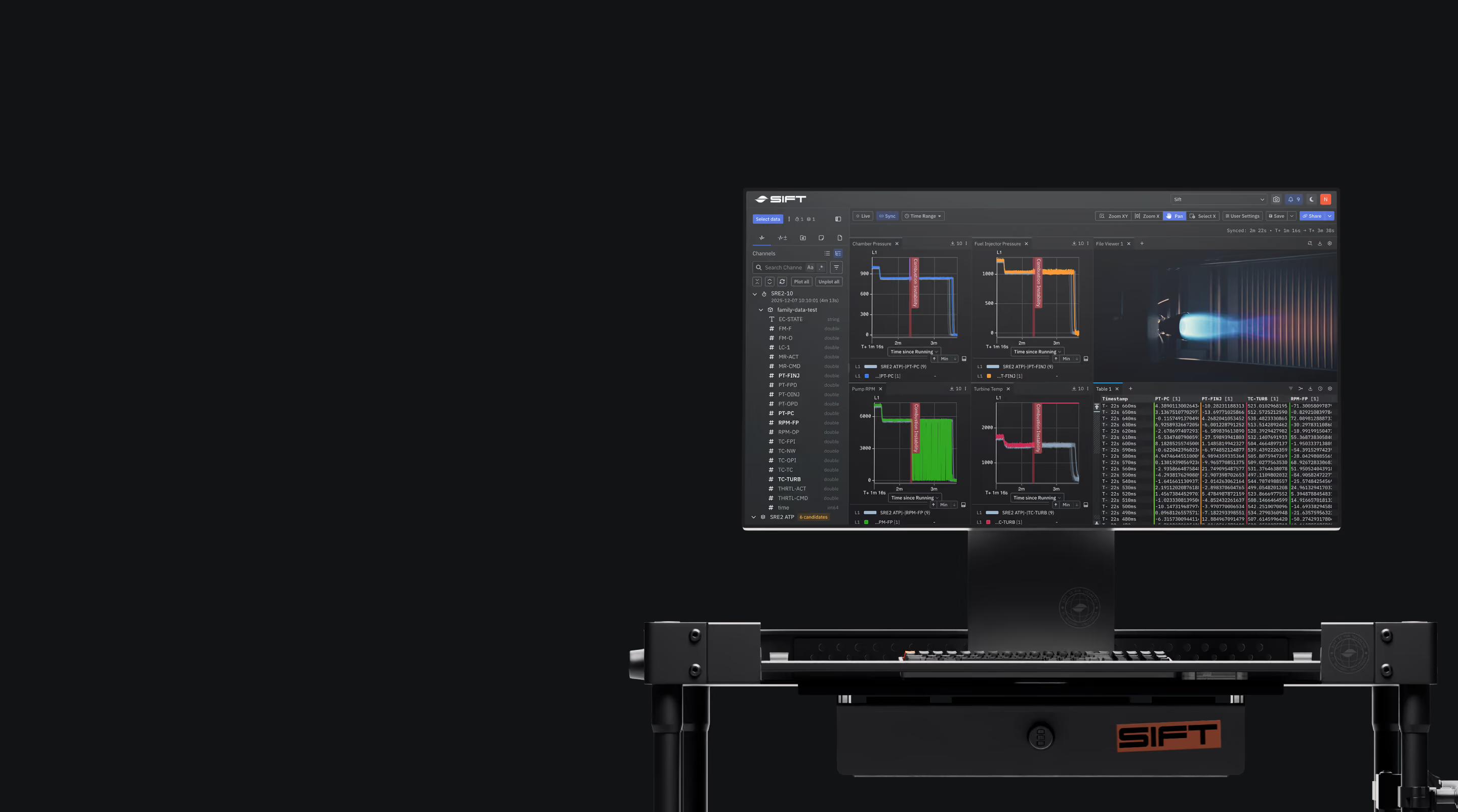
TEC at a glance
FOUNDED
2021
HEADQUARTERS
Munich and Bordeaux
MISSION
Democratizing space exploration with sustainable, affordable spacecraft
BUILDING
The Nyx reentry capsule, the Hilal lunar lander, and the sovereign propulsion systems that power them
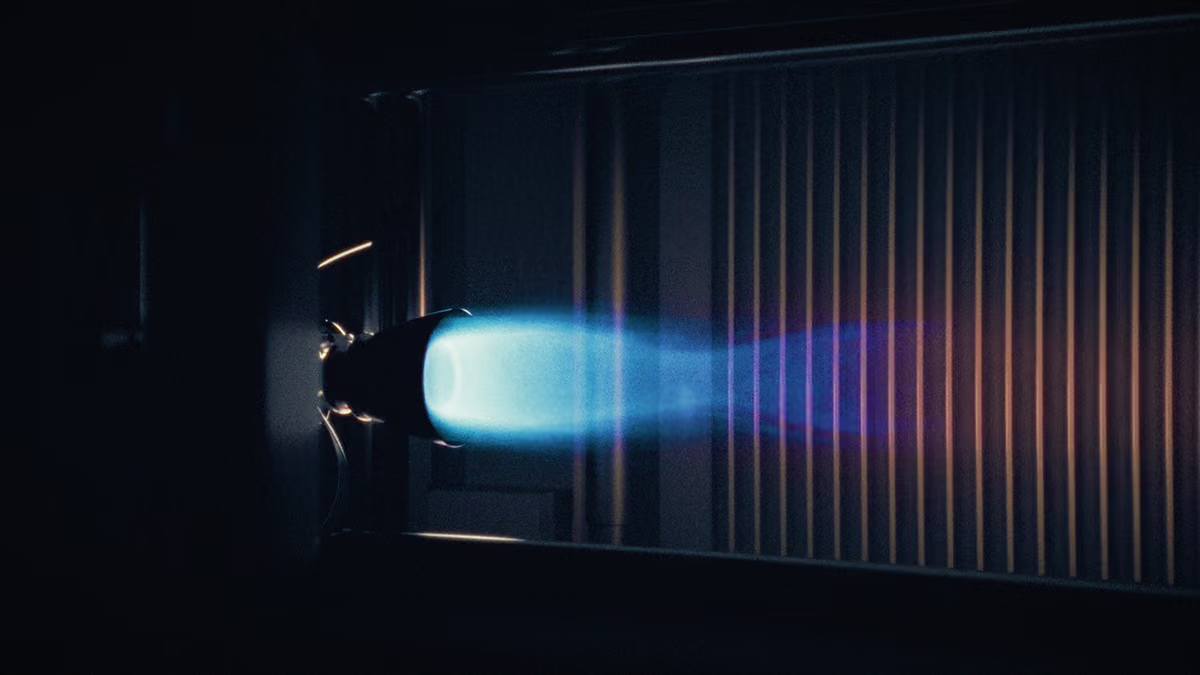
Europe needs sovereign access to orbit, and TEC is building the propulsion to reclaim it. Mistral, a ~200N green hypergolic thruster, will maneuver TEC's Nyx reentry capsule in orbit. Huracan, Europe's first electric-pump-fed cryogenic rocket engine at 15 kN of vacuum thrust, will power the Hilal lunar lander toward a 2030 Moon landing. Both engines are built, tested, and qualified in Europe.
Propulsion development lives or dies by test cadence. TEC has already run six Mistral thruster configurations with burns up to 28 seconds and completed four Huracan thrust chamber campaigns, a pumps campaign, and a fully integrated engine campaign. Every test produces high-rate telemetry across dozens of sensors, all under some of the strictest export controls.
Fragmented tooling was slowing that loop. Custom scripts and Jupyter workflows, duplicated across teams, dragged the turn between tests and raised the risk of missing a quality-critical signal. TEC standardized on Sift as its propulsion testing platform across every site, keeping engineers iterating on the engines, not the pipeline.

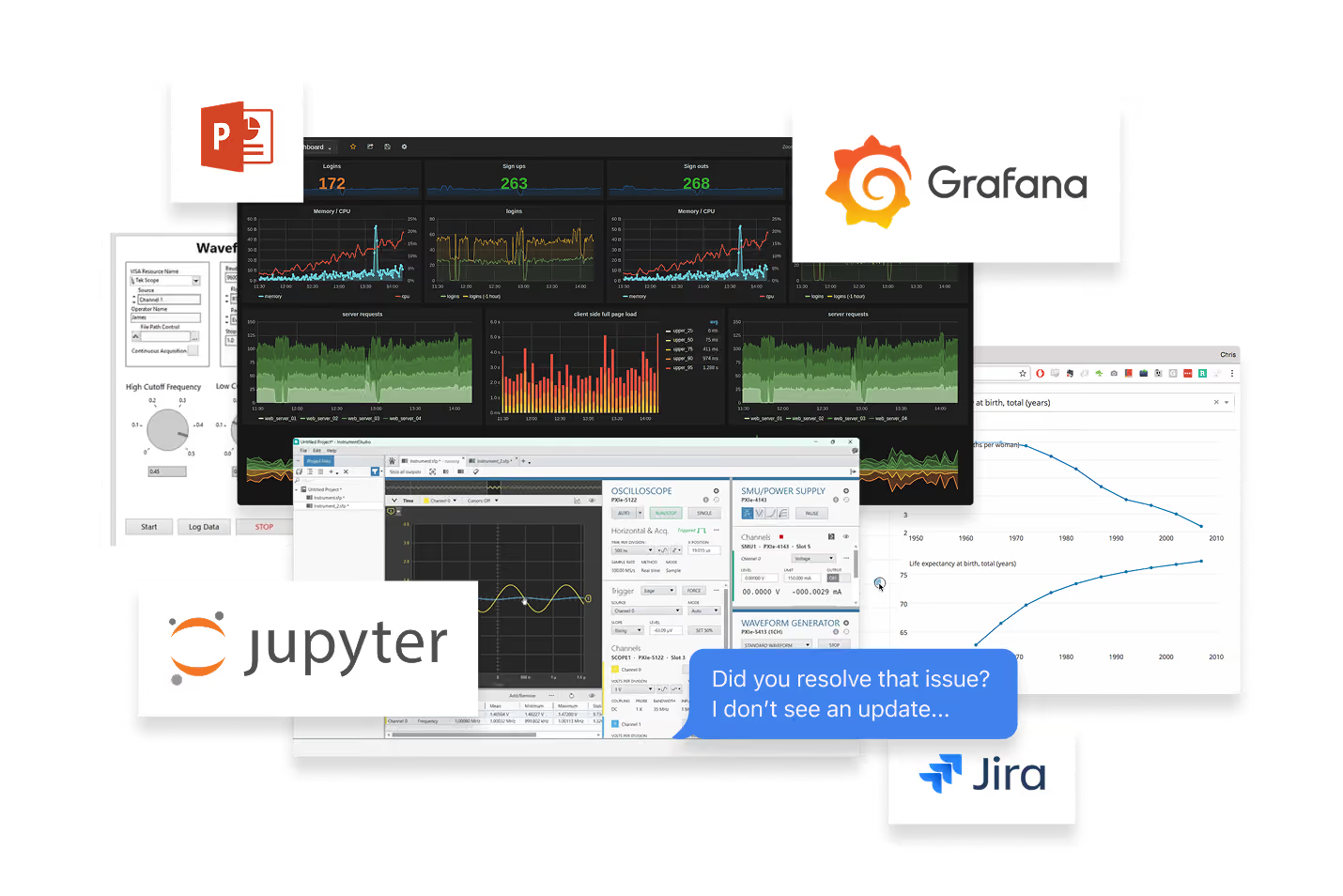
Analysis lived in custom scripts and Jupyter workflows, sometimes duplicated across teams. Each test's telemetry had to be aligned, compared against prior runs, and fed into the next design iteration, and the manual grind slowed every turn while export-control requirements kept growing.
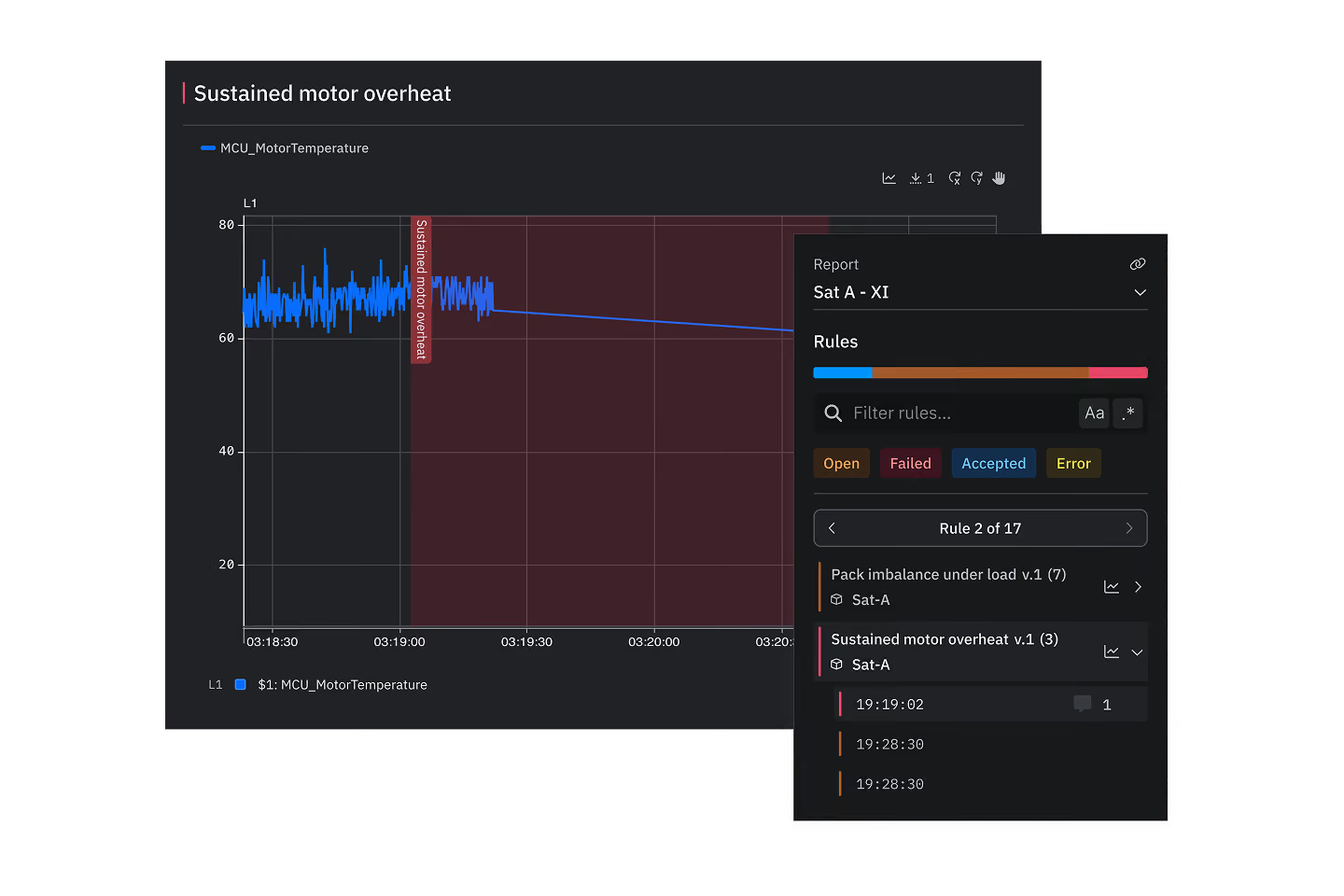
Pull key sensor metrics and build calculated channels without writing scripts, detect steady-state operation automatically, and keep telemetry, video, metadata, and attachments in one place. Deployed in the AWS Paris region, the data never leaves France.
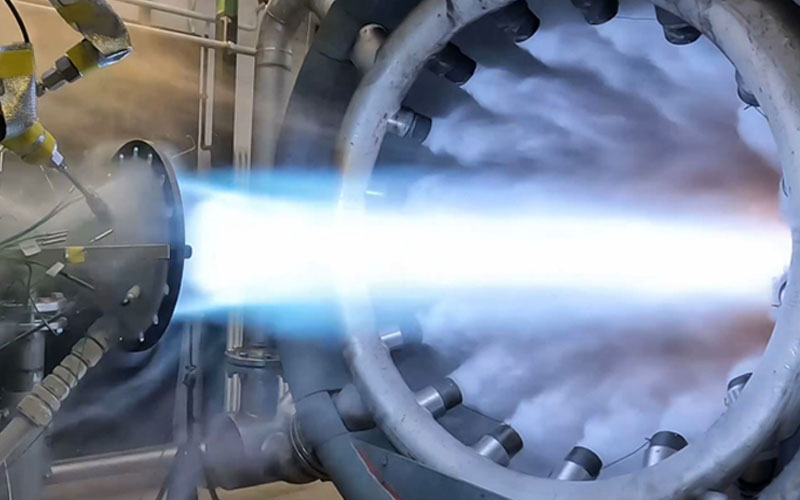
TEC's engineers save hours of manual analysis per campaign, UK test stands and German engineering teams work from the same data, and export-control compliance is built into the platform rather than bolted on. The next Huracan campaign arrives in early 2027 with the data workflow already proven.

In their words
With Sift, TEC's engineers spend less time moving files and more time iterating on the system.
2
propulsion systems for European launch
€10B+
market opportunity
5+
countries the TEC team is spread across, all working on 1 platform
Hours
of manual analysis saved per test campaign
Sift for Aerospace
Pull key sensor metrics, averages, minima, maxima, and standard deviations, and combine raw sensor data into higher-order calculated channels, no custom scripts required. TEC's engineers do it all in Sift, spending less time moving files and more time iterating on the engine.
Codify analysis once and let every test run through it. TEC saves hours of manual analysis per campaign with Sift's rules engine.
Test in the UK, engineer in Germany and France, and work from the same data everywhere. TEC gates exactly who sees which test data with Sift's attribute-based access control.
Sift features
Pull key metrics the moment a test ends
→
TEC's engineers grab averages, minima, maxima, and standard deviations straight from the platform, no custom scripts.
Combine raw sensors into higher-order signals
→
Turn dozens of raw streams into the signals that drive design decisions with calculated channels.
Find steady-state automatically
→
Identify steady-state operation in test data and save hours of manual analysis per campaign with Sift rules.
Keep UK test stands and German engineering in sync
→
Both sites access the same data and share visualization snapshots through Sift.
Keep every data type in one place
→
Telemetry, video, metadata, and attachments live together, so engineers stop moving files and keep iterating.
Meet export control without slowing collaboration
→
Data resides in the AWS Paris region and never leaves France, with attribute-based access control gating who sees which tests.